History & Origins of the Law
The Slacks Creek Tragedy
In the early hours of 23 August 2011, a tragic house fire in Slacks Creek, Queensland claimed the lives of 11 people, including eight children, making it the deadliest residential fire in Australian history. The fire began just before midnight in the downstairs office area of the home. At 12:04 am, the first emergency call was made. Despite the quick response, with fire crews arriving by 12:11 am, the house was already fully engulfed in flames. The lack of working smoke alarms meant no early warning for the sleeping occupants.
Only three of the fourteen people inside the home managed to escape. The rest were trapped and died from smoke inhalation within minutes. The fire was found to be accidental, but the tragedy could likely have been prevented if functioning smoke alarms were installed.
Your Responsibilities
Every Queensland homeowner must make sure their property has photoelectric, interconnected smoke alarms installed in every bedroom, in hallways connecting bedrooms, and on every level of the home[cite: 1]. These alarms must meet AS 3786-2014, be less than 10 years old, and be powered by mains power or a sealed 10-year lithium battery[cite: 1].
If you are selling or renting a property, it must be fully compliant before the sale or lease can proceed[cite: 1]. From 1 January 2027, all homes in Queensland — including owner-occupied properties — must meet the full requirements[cite: 1].
You are responsible for testing alarms monthly, keeping them clean, and replacing them before they expire[cite: 1]. Installing compliant alarms is not just a legal requirement — it dramatically increases your chances of escaping a fire safely[cite: 1].
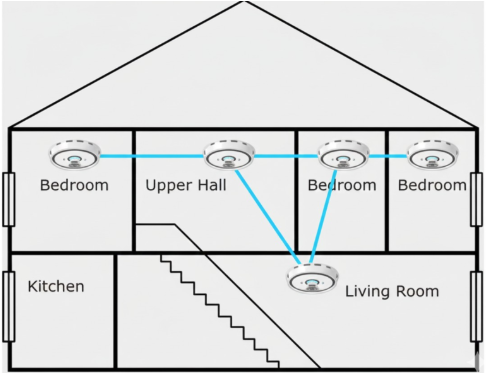 Interconnected Smoke Alarm Layout Diagram
How to Comply
1. Photoelectric & Interconnected
Replace old ionisation units with photoelectric smoke alarms. Alarms must be interconnected so that when one sounds, all alarms throughout the residence trigger simultaneously.
2. Bedrooms & Key Locations
Alarms must be installed inside every bedroom, in hallways connecting bedrooms to the rest of the home, and on every storey of multi-level dwellings.
3. Approved Power Sources
Alarms must meet Australian Standard AS 3786-2014 and be powered either by 240V hardwired mains connection or a non-removable 10-year sealed lithium battery.
Need to Know
Upgrading your home to meet Queensland’s smoke alarm laws is simple when you know what to check. Start by identifying the alarms you already have, then replace or upgrade them to the required photoelectric, interconnected alarms in every bedroom, hallway, and level of your home.
Whether you choose hardwired or 10-year battery units, make sure they meet AS 3786-2014 and are installed by a licensed professional. Once compliant, regular testing and maintenance will keep your home protected — and fully ready for the end of 2026 deadline.
Compliance Checklist
| Category | Requirement |
|---|---|
| Alarm Type | Photoelectric (AS 3786-2014) |
| Placement | Bedrooms + Hallway on each level |
| Interconnection | Wired or RF Wireless Frequency |
| Power Source | 240v Hardwired or 10-Year Sealed Batteries |
| Installation | Licensed Electrician or DIY (Batteries only) |
| Maintenance | Monthly test, clean as per Manufacturer's instructions |
The 2027 Deadline Challenges
As the 2027 smoke alarm compliance deadline approaches, households will face growing challenges:
- Installer shortages will cause booking delays, making it harder to meet legal requirements in time.
- Prices are likely to increase due to high demand for alarms and electricians.
- Property sales and rentals may be delayed or disrupted by noncompliance, affecting legal and financial transactions.
- Fire risks remain high in non-upgraded homes, especially for vulnerable occupants. Acting early ensures timely installation, better pricing, and peace of mind before the rush.
Why it Matters
Fire Deaths
Deaths in Australia (2001–2019)
A total of 992 residential fire-related deaths were reported to coroners across Australia — averaging 52 deaths per year. The majority of these fatal incidents occurred in houses (67%), with smaller numbers in units, flats, caravans, and farmhouses.
Activity
Wake up Australia
Resting or sleeping was the most common activity at the time of death, accounting for 43% of fatalities — highlighting the increased risk during nighttime fires when occupants are less alert.
Fatal 5 +
Is this you?
- Cigarettes / matches
- Household appliances
- Fuels / solvents
- Lithium Batteries
- Overloaded Power Board
PLUS: Alcohol and drugs contributed to death in approximately 20.3% of cases.